Understanding Malware Patching
Malware patching is the process of modifying malicious software to alter its behavior, typically to bypass security measures or introduce new functionalities. This is often done by cybercriminals to evade detection and prolong the lifespan of their malicious creations.
Common Techniques Used for Malware Patching:
Code Modification:
▪Patching Instructions: Altering specific instructions to change the malware's behavior.
▪Modifying Strings: Changing strings used for identification or communication.
Adding or Removing Functionality: Introducing new features or removing existing ones.
Anti-Analysis Techniques:
▪Obfuscation: Making the code more difficult to analyze by using techniques like code encryption, packing, and virtualization.
▪Anti-Debugging: Implementing mechanisms to detect debugging tools and hinder analysis.
▪Anti-Disassembly: Making it difficult to disassemble and reverse-engineer the malware.
Evasion Techniques:
▪Polymorphism: Changing the malware's structure and behavior to evade detection by antivirus and anti-malware software.
▪Metamorphism: Generating new, functionally equivalent malware variants with each execution.
Why Malware is Patched:
▪Extending Lifespan: By patching vulnerabilities and adding new features, attackers can prolong the effectiveness of their malware.
▪Evading Detection: Patching can help malware avoid detection by security solutions.
▪Targeting Specific Systems: Malware can be customized to target specific vulnerabilities or systems.
Implications of Malware Patching:
▪Increased Sophistication: Patched malware can become more sophisticated and harder to detect and remove.
▪Evolving Threat Landscape: Cybercriminals constantly adapt their techniques, making it challenging to stay ahead of the latest threats.
▪Need for Continuous Updates: Security software and systems must be updated regularly to counter new malware variants.
To mitigate the impact of malware patching, organizations should:
▪Keep Software Updated: Regularly install security patches and updates.
▪Use Robust Security Solutions: Employ advanced antivirus and anti-malware software.
▪Implement Network Security Measures: Use firewalls, intrusion detection systems, and other security measures to protect networks.
▪Educate Users: Train users to recognize and avoid phishing attacks and other social engineering tactics.
▪Stay Informed: Keep up-to-date with the latest cybersecurity threats and trends.
Let's try a sample......for PATCHING..................................
First thing is to do is CODE ANALYSIS use ida
If you get the main function right of the bat that's good. but if not.
we need to identify main function....
1) Directly open at main.
2) First Function call (just after start).
3) Top-down-approach: look for string. if found first function is main.
4) If not Down-Top-Approach: you have to find instructions:
Multiple push/mov followed by a call. atleast three push/mov. just after that you will get the main function.
use Down-Top-Approach method to find the main function of the provided sample.
Simple AntiVM Bypass:
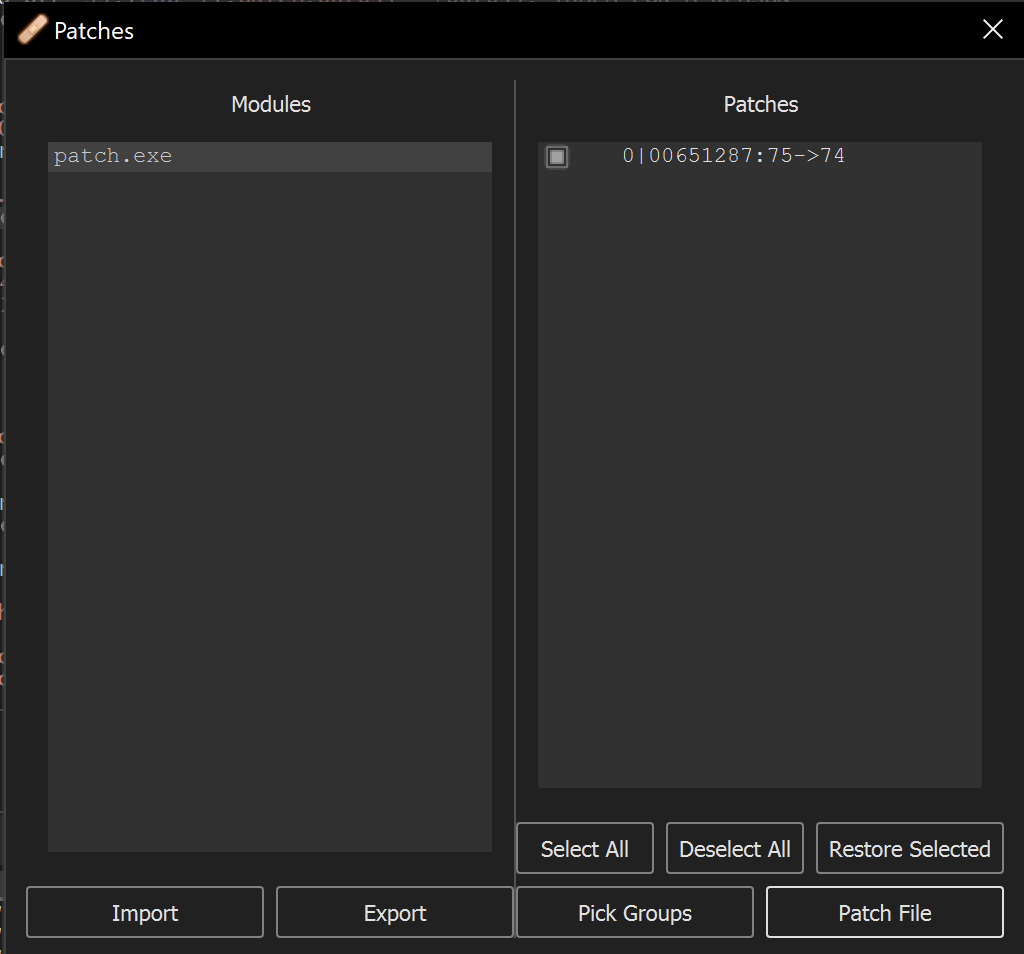
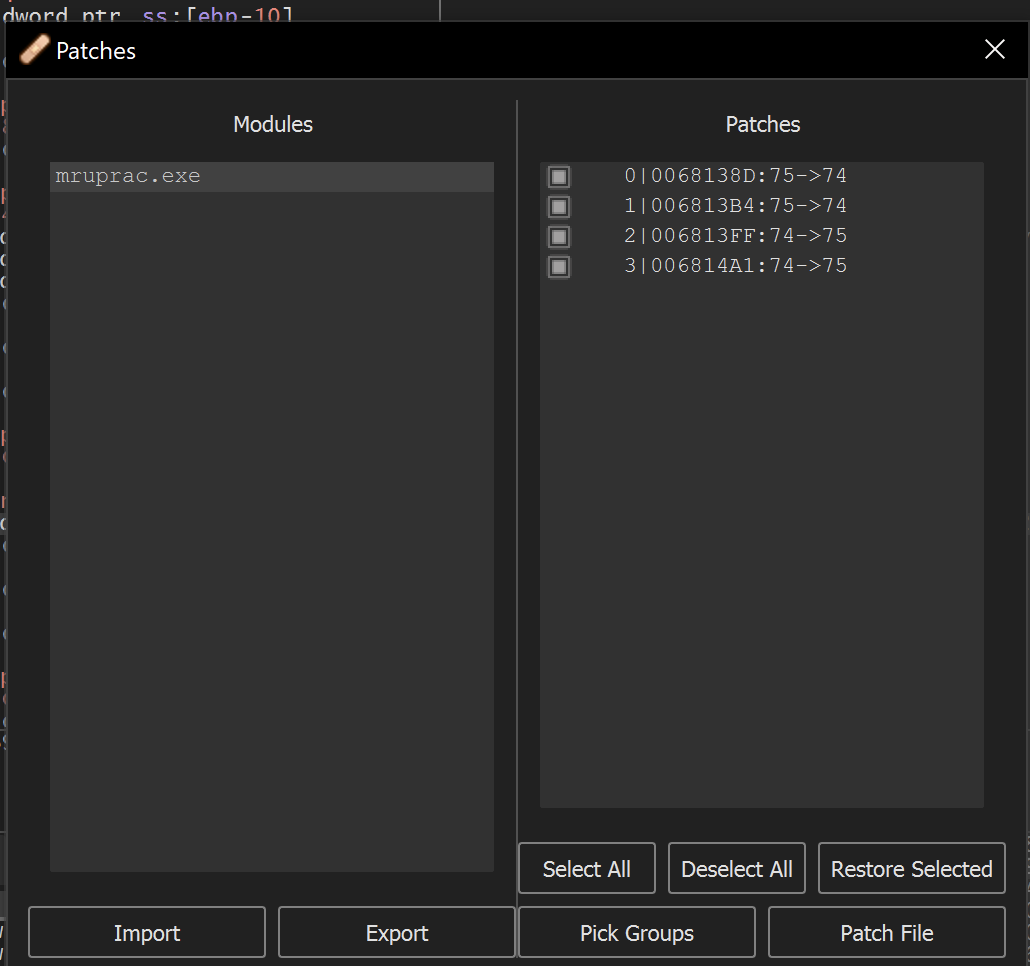
change the instructions from jnz to jz and jz to jnz
There's a sample in named ``MRUPrac.exe` in `Mal.7z`` folder.
password:``Passw0rd1337``
check out the ``Malware-Report.pdf``
Now the sample has multiple AntiVM techniques.......
use x32dbg to patch the sample............
▪### To bypass internet check......
change the instruction
at address ``001A1287`` from jne ---> je
▪### To bypass anti vm exiting..........
chnage the instruction
at address ``006813B4`` from jne ---> je
There's more antivm techniques to patch check out the malware report for more........................